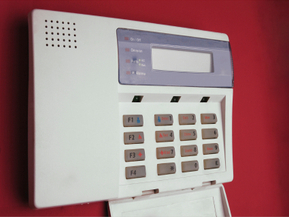

Hands trussed behind his back as the thieves ransacked his flat, the diamond merchant reflected with unromantic detachment that this could be the work of almost any of his colleagues. Yet he was not totally unprepared for this eventuality, which was why his thoughts kept returning to his home security system. "There's a special wireless mode enabled by default," the salesperson had confided in him. "It can't be bypassed by cutting the wire, and when the alarm is forcibly disabled it will alert us through secondary channels."Learning Chinese? Our Elementary level at Popup Chinese is where things get a bit more complicated. By this level you should already know the basics and be able to parse simple sentences. This lets us start exploring more complicated grammar structures and more colloquial expressions that are harder to translate literally into English. But we still do this within the context of dialogues that showcase the sort of genuine mandarin you'll hear the next time you're trussed up in a home invasion waiting for the police to arrive.
dominic.jackson
said on July 10, 2012
I find myself at the awkward juncture where absolute beginners is just too easy, save for the odd bit of low frequency vocab, but I find most of the elementary dialogues just too daunting without the transcript to see me through. This came up in my itunes feed and I thought I'd give it a listen. Bridges the gap perfectly. Really good dialogue too.
LincolnDog
said on July 27, 2012
Why is 我是说 or 我的意思是 translated with the past tense? Why wouldn't it be 我是说了 or 我把意思是了....
Echo
said on July 27, 2012
@LincolnDog,我是说 and 我是说了 both make sense, but they don't mean the same thing. 我是说 is a set phrase. 我是说了 is one of the examples of using 是 to emphasize whatever after it. 我是说 means what I was saying was, and then you follow it with a further explanation of what you said. 我是说了 means I did say that, then you don't further explain it. For instance:我是说,我不想出去。What I was saying was I don't want to go out.我是说了,但是现在我改主意了。I did say that, but now I have changed my mind.我是说了,你想怎么样?I did say that, and what are you going to do about it?我的意思是 is a set phrase too. Also in Chinese, we don't treat 是 like other ordinary verbs, and you can not add words like 了,着 or 过 after it to change the tense.--Echoecho@popupchinese.com
LincolnDog
said on July 28, 2012
Echo, thanks for this distinction. I can't wait until I have the opportunity to say, "我是说了,你想怎么样? I took a peek at your secret diary and I can't stop laughing. Hope things work out better at the sweatshop.
Echo
said on July 28, 2012
@LincolnDog,Hahaha... summers are always better, no need to eat too much food :P--Echoecho@popupchinese.com
alinepnina
said on January 26, 2013
It remains almost impossible still to hear the tones when someone speaks fast. I guess more exposure might help. I have to remember that people don't speak clearly in English either and that when I am with young English-speaking people I find they gabble too. But, it still doesn't make me feel less dismayed when confronted with a Chinese speaker speaking at normal speed. Oy vey
October 4, 2013
I take some comfort in the guy getting confused here because I also don't fully get the sentence 你永遠也別想找到它在哪兒either!Word for word that's "you forever really don't think to find it located where" which doesn't quite fit comfortably in my brain, it's too far from English grammar. If he'd said 別想你可以找到 things would translate a little smoother as "you forever really don't think you can to find it located where" and here a missing "is located" is easily imagined so not a problem.So what grammatical monster is lurking here that let's him skip你可以?It seems for an English speaker we want to have the object你appearing possibly twice, and if only once having it in the middle would be much easier than having it right at the beginning.Or is the sentence slightly ambiguous even in Chinese, hence the confussion that follows?Hey by the way, I love your website - the magic you weave at Popup Towers has brought my motivation for learning Chinese back from the dead and it's now going viral!!! 谢谢你们!!
Grace Qi
said on October 6, 2013
@裴戴維,你好,戴維!Thank you very much for the compliment!! Actually this sentence could be"你永远也别想知道它在哪" (Don't think you will ever find out where it is) or "你永远也别想找到它" (Don't think you will ever find it). "永远"(ever) and "也" are here to emphasize the tone and feeling to be expressed. So at this point, "你别想找到它" is also correct. It's more like "Don't you even think about finding it" in English. Because "你" is a subject here which has to come first in a sentence, it's "你别想". Then "你别想" do what? - "找到它". "你别想" already implies "you can't", so you don't have to put "可以" in the sentence- That's why he could skip the "你可以" you mentioned. ;)Thank you again for the kind words and hope you enjoy your time here;)Best,Grace